Harry Reyes Nieva About CV Projects Publications Presentations Teaching News
Biomedical Informatics | AI for Precision Health
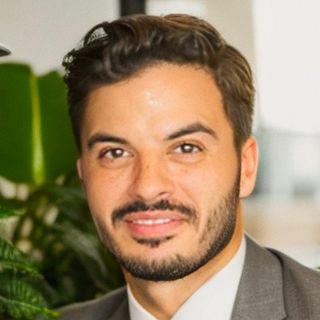
I am a biomedical informatician specializing in artificial intelligence (AI) in medicine and public health. My research aims to advance precision health for all populations by harnessing AI and informatics to accelerate scientific knowledge discovery and translation at scale, strengthen next-generation learning health systems, and interrogate the ethical, legal, and social considerations necessary for the development of human-centered AI.
My research is informed by a decade and a half of prior domestic and international experience in applied clinical and public health informatics, health services research, health systems strengthening, and humanitarian efforts including roles in strategic information for the U.S. President’s Emergency Plan for AIDS Relief (PEPFAR) at Harvard University and a three-year term appointment as a Commissioner of Human Rights. My overarching goal is to realize the tremendous promise of AI for scientific discovery and healthcare innovation while minimizing its potential perils. Recently I was named a STAT Wunderkind, which highlights 30 of the top early-career researchers in health and medicine in North America.
As a first-generation college graduate, I have benefitted greatly from many excellent mentors in my academic and personal journey. I am also an active mentor/mentee of the Biomedical Science Careers Program. I completed my PhD at Columbia University where I was advised by Prof. Noémie Elhadad, Chair of the Department of Biomedical Informatics. For most of my PhD, I was also a Visiting Postgraduate Research Fellow in the Department of Medicine at Harvard Medical School. In addition to degrees in biomedical informatics, I hold a Master of Applied Science from the Johns Hopkins Bloomberg School of Public Health in Spatial Analysis and a Bachelor of Arts from Yale University in History and Sociology.
Many of the systems we rely on for scientific discovery, diagnosis, care coordination, and population management in healthcare remain brittle, slow, and built for an earlier era. At the same time, clinicians, researchers, and health systems generate vast quantities of data that are rarely translated into actionable knowledge for scientific inquiry, patient care, or population health. Advances in informatics and AI make it possible to turn disparate data streams into adaptive, auditable reasoning systems that support both discovery and decision-making.
I develop computational techniques that address problems central to biomedical research, healthcare delivery, and public health practice, where decisions and inferences must often be made under uncertainty, incomplete information, and constrained resources. My work aims not only to improve care and public health action, but also to accelerate scientific knowledge discovery by enabling more systematic evidence generation, hypothesis development, and identification of overlooked patterns across populations, diseases, and care processes. Central themes of my research include strengthening disease surveillance and emergency preparedness and improving the prevention, screening, diagnosis, and treatment cascade for acute and chronic conditions.
Methodologically, my research combines machine learning (ML), natural language processing (NLP), and spatiotemporal modeling with traditional biostatistics and epidemiology. I design intelligent systems and data platforms, build robust machine learning models, create open knowledge bases for reuse, and develop high-throughput computational techniques that extract, synthesize, and reason over evidence from large, heterogeneous data sources. Prior studies have derived novel insights from thousands to hundreds of millions of individuals by mining large data warehouses (e.g., electronic health records, health information exchanges, and biobanks), biomedical literature repositories, broad population-level sources (e.g., national claims, open government datasets, public health reporting), and primary data collected for clinical trials and national surveys.
My research seeks to examine and strengthen the values, data, models, and systems that shape both biomedical discovery and healthcare delivery. In particular, my work focuses on: